



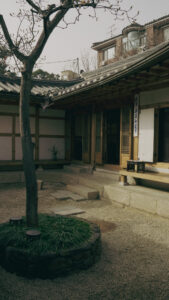
Hanok courtyard
Among my favorite architectural styles is the Hanok house of South Korea. They were simple, beautiful, thoughtfully designed and peaceful. The courtyards were welcoming and had me wondering, yet again, why we didn’t build this way in 20th century America. The Hanok village is still a neighborhood where people live but several properties sprinkled throughout the district have been turned into museums. We really enjoyed the walking tour and spending quiet time in the houses to soak up the style and get a small taste of what it might be like to live there.
Seoul’s Hanok story is dramatic. Wars, rapid industrialization, and post-1950s housing booms replaced many with apartments. By the late 20th century, the hanok footprint had shrunken dramatically.
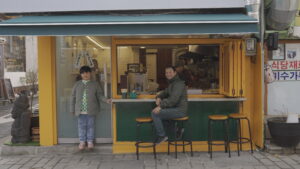
Getting a snack on our walk through the neighborhood
Then came a revival—part heritage, part lifestyle. Neighborhoods like Bukchon (between Gyeongbokgung and Changdeokgung palaces), Ikseon-dong, Seochon, and newer ensembles like Eunpyeong Hanok Village showcase different paths: historic preservation, adaptive reuse, and contemporary hanok designed with modern services. Today, you’ll find hanok cafés, guesthouses, galleries, and family homes, all riding growing appreciation for craft, walkable alleys, and climate-savvy design. We ate at several places where you could grab a quick bite and sample the local flavors while you walked the streets.
This revival also keeps alive the work of daemokjang (master carpenters) and allied crafts—roof tilers, hanji makers, plasterers—recognized for their role in Korea’s intangible cultural heritage. Preserving hanok isn’t only about pretty streets; it sustains knowledge of low-carbon materials, passive comfort, and repairable construction that contemporary cities need.
6809 BROCKTON AVENUE, RIVERSIDE CA 92506 (951) 961-1609 CALRE#01922817